





Real estate automation uses AI-powered systems to handle follow-ups, task management, and communication automatically—so agents respond faster without sacrificing deal quality.
In today’s market, speed and consistency matter more than volume. Real estate automation solves one of the industry’s most expensive problems: missed or delayed follow-ups. When leads go cold, it’s rarely because of pricing—it’s because no one responded fast enough or consistently enough.
Modern real estate AI tools focus on process reliability. Instead of reminding agents what to do, automation ensures it gets done. This shift allows agents to manage more conversations at once while maintaining a high standard of professionalism across every touchpoint.
How Does Automation Reduce Follow-Ups Without Hurting Conversions?
Automation reduces follow-ups by executing them automatically at the right time, ensuring no lead is ignored while agents focus on live conversations. Manual follow-up relies on memory and discipline—two things that fail under pressure. Real estate automation systems remove this risk by triggering emails, texts, and task reminders based on lead behavior and deal stage.
For AI for real estate agents, the goal isn’t replacing communication; it’s protecting it. Automated sequences handle routine nudges, while agents step in when intent is high. This balance improves response time, increases trust, and prevents deals from stalling due to human delay.
Which Real Estate Tasks Should Agents Automate First?
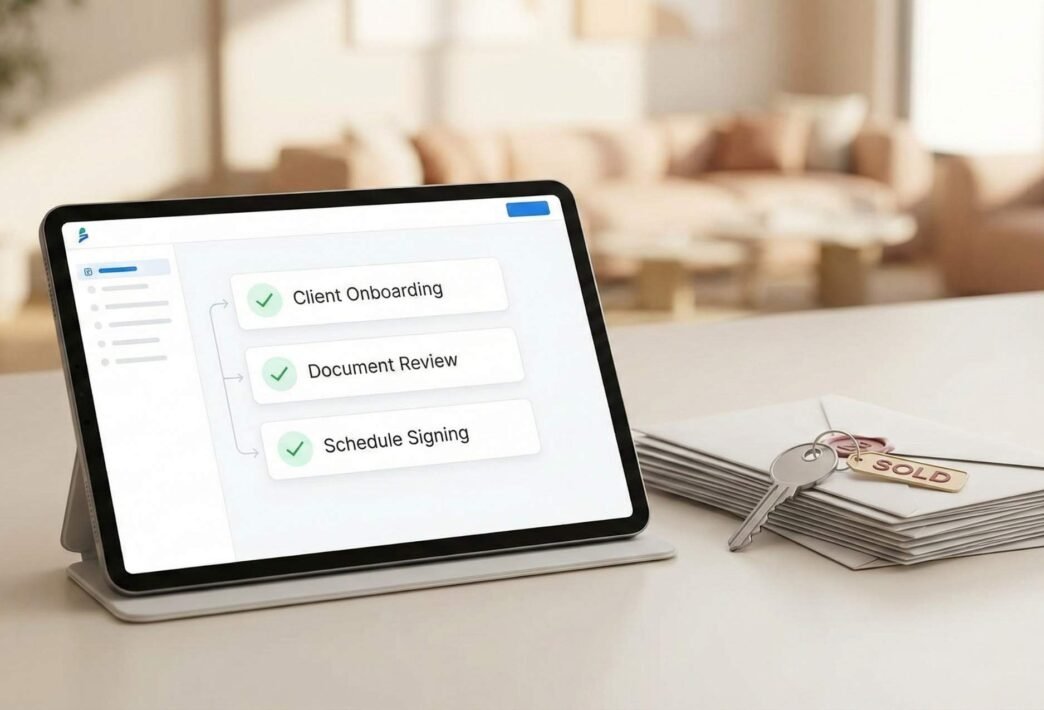
Agents should automate lead capture, follow-up sequences, appointment reminders, and document workflows before expanding into marketing automation.
Not all tasks benefit equally from automation. High-impact automation focuses on actions that are repetitive, time-sensitive, and easy to standardize. Lead follow-ups, status updates, and reminders fall squarely into this category.
By automating these foundational tasks, agents create breathing room in their schedule. Real estate automation becomes a safety net—ensuring no opportunity slips through while freeing agents to focus on negotiations, pricing strategy, and client relationships.
Can Automation Replace Personal Relationships in Real Estate?
No—automation supports personal relationships by handling background tasks, allowing agents to spend more time on human interaction. The fear that automation feels “robotic” misunderstands its role. Real estate AI tools do not replace conversations; they protect them. Automated systems ensure consistency and timeliness, while agents control tone, strategy, and decision-making.
Clients don’t value effort—they value responsiveness and clarity. Automation delivers both, quietly reinforcing professionalism without diminishing the agent’s role in the transaction.
A Practical Real Estate Automation Workflow
A high-performing real estate automation workflow follows a simple structure:
- Leads enter through forms, ads, or landing pages and are instantly logged
- Automated follow-up sequences trigger within seconds
- Appointments and reminders are sent without manual input
- Deal stages update automatically as actions are completed
- Agents intervene only when judgment or negotiation is required
This workflow minimizes administrative drag while maximizing responsiveness—one of the strongest predictors of conversion in modern real estate.
How GoHighLevel Functions as a Real Estate Automation System
Real estate automation becomes effective only when it operates as a system rather than a collection of disconnected tools. This is where platforms like GoHighLevel play a central role. Instead of focusing solely on contact storage, GoHighLevel is used to automate execution across lead response, follow-up, and pipeline movement.
In practical agent workflows, GoHighLevel acts as the control layer for communication timing. When a lead enters through a form, landing page, or ad, the system responds instantly and initiates follow-up sequences without waiting for manual action. This removes one of the most common causes of lost deals: delayed or inconsistent responses.
Agents typically rely on GoHighLevel to automate:
- Immediate SMS or email responses to new inquiries
- Structured follow-up sequences that continue until engagement
- Pipeline stage updates based on lead activity or actions
- Re-engagement of inactive leads without manual tracking
This approach shifts automation from reminders to execution. Instead of telling agents what needs to be done, the system ensures it happens at the right time. Agents remain fully responsible for conversations, negotiation, and decision-making, while the automation layer protects speed and consistency in the background.
For long-cycle transactions and high lead volume environments, this system-level automation reduces follow-up pressure without reducing personal interaction. That distinction is what allows real estate automation to close more deals without compromising trust.
Where Automation Often Goes Wrong
Automation fails when it’s deployed without strategy. Common mistakes include over-automation, poor message timing, and disconnected systems. When tools don’t communicate with each other, agents lose context instead of gaining efficiency.
Effective real estate automation is intentional. Each automated step should exist to protect speed, accuracy, or consistency—not to eliminate human involvement altogether.
Conclusion: Automation Should Reduce Friction, Not Trust
Real estate automation is no longer optional—it’s operational infrastructure. When implemented correctly, it reduces follow-ups without reducing deals, protects response time, and increases agent capacity without sacrificing relationships.
The most successful agents in today’s market don’t work harder—they work with systems. By combining intelligent workflows with the right real estate AI tools, agents gain leverage where it matters most: speed, consistency, and deal execution.
At Xalt Stack, the focus remains practical—automation that supports agents, strengthens trust, and keeps deals moving forward.
FAQs
What is real estate automation?
How does real estate automation reduce follow-ups?
Is real estate automation only for large teams?
How is AI used in real estate automation?
Will automation hurt client relationships?
When implemented correctly, automation improves client relationships by increasing responsiveness and consistency, while agents remain responsible for conversations and negotiations.