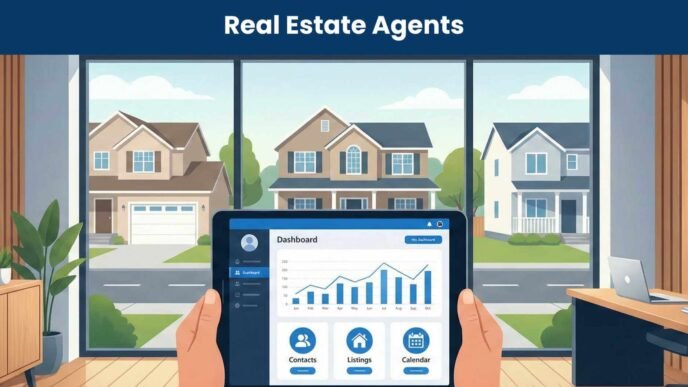







For much of its history, CRM in the real estate industry was viewed as little more than a digital address book. Agents stored names, phone numbers, and notes, while deals lived in inboxes, spreadsheets, or memory. That approach worked when volume was low and operations were simple. It breaks down quickly in modern markets defined by online leads, longer sales cycles, and multi-channel engagement.
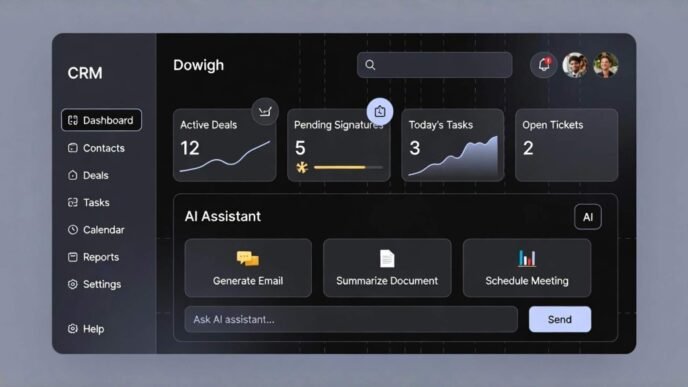
Today, CRM in the real estate industry has evolved into a revenue system—a platform that governs how leads are captured, nurtured, converted, and measured. At scale, CRM is no longer about organizing contacts; it is about controlling outcomes. This shift is reshaping how agents, teams, and commercial operators run their businesses.
How GoHighLevel Reflects the Shift to CRM as a Revenue System
As CRM in the real estate industry has evolved from basic contact management into full revenue infrastructure, certain platforms have been adopted specifically for their ability to control execution rather than just store data. One example frequently used in automation-driven environments is GoHighLevel.
In practice, GoHighLevel is used less as a traditional CRM and more as a system that governs how revenue flows through the business. Leads are captured automatically from multiple channels, acknowledged instantly, and placed into defined pipelines without manual intervention. Follow-up sequences are triggered by rules rather than memory, ensuring consistent engagement across long sales cycles.
Within modern real estate operations, GoHighLevel is commonly used to:
- Control speed-to-lead and follow-up timing through automation
- Centralize all communication history for accountability and review
- Enforce standardized pipelines that reflect real deal stages
- Support visibility across agents, teams, or commercial operators
- Provide data that ties activity directly to revenue outcomes
This usage pattern illustrates the broader industry shift. CRM in the real estate industry no longer supports revenue indirectly—it actively shapes how revenue is generated, nurtured, and measured. By embedding automation and communication control into the CRM layer, systems like GoHighLevel reduce reliance on individual habits and increase predictability at scale.
For organizations moving beyond contact-based CRMs or outgrowing free CRM for real estate options, this transition marks a turning point. The CRM becomes infrastructure: a system that enforces discipline, protects opportunities, and aligns daily activity with long-term revenue goals.
What does CRM in the real estate industry actually do today?
CRM in the real estate industry now manages the full lifecycle of revenue, from lead acquisition to deal conversion and performance reporting. It acts as an operating system rather than a contact database.
In modern real estate operations, CRM systems actively control execution instead of passively storing information. Today’s CRM in the real estate industry is used to:
- Capture leads automatically from websites, portals, and marketing campaigns
- Log all calls, emails, and messages in a centralized communication history
- Trigger follow-up actions based on time, behavior, or deal stage
- Track opportunities through defined pipelines from inquiry to closing
- Provide leadership with real-time visibility into performance and revenue forecasts
This shift allows businesses to scale without relying on individual memory or inconsistent habits.
Why did free CRM for real estate become popular—and where does it fall short?
Free CRM for real estate became popular because it reduced cost barriers for early-stage agents. It falls short when automation, reporting, and scalability become necessary. Many agents begin with a free CRM for real estate because it offers basic contact storage and task reminders. These tools are useful for learning fundamentals and organizing early leads. However, most free systems lack the automation and visibility required once volume increases.
As businesses grow, limitations appear quickly. Manual follow-up replaces automated workflows, reporting becomes fragmented, and leadership loses oversight. At that stage, free CRM for real estate often creates more friction than value, slowing growth instead of supporting it.
How does CRM evolve from contact management to revenue systems?
CRM evolves into a revenue system when it actively controls lead flow, follow-up timing, and deal progression. Revenue becomes predictable when workflows replace individual habits. The evolution typically happens as businesses mature and volume increases. CRM transitions from basic organization to revenue control by:
- Moving from manual data entry to automated lead intake
- Replacing reminder-based follow-up with trigger-driven workflows
- Shifting from static contact lists to dynamic deal pipelines
- Using CRM data for forecasting, not just record-keeping
At this stage, CRM in the real estate industry becomes a system that shapes daily behavior, ensuring consistency across agents and markets.
What makes the best CRM software for commercial real estate different?
The best CRM software for commercial real estate supports long sales cycles, multiple stakeholders, and detailed deal analysis. It prioritizes visibility and data over speed alone. Commercial real estate introduces complexity that residential systems often cannot handle. Deals involve investors, lenders, property data, and extended timelines. CRM platforms serving this market must integrate financial analysis, document tracking, and deal-level insights.
Unlike residential environments focused on speed-to-lead, commercial workflows emphasize deal management and forecasting. The best CRM software for commercial real estate reflects this reality by supporting deep pipelines and structured collaboration across teams.
The shift from agent tools to business infrastructure
CRM adoption often fails when platforms are treated as personal productivity tools instead of shared systems. In the modern real estate industry, CRM must function as infrastructure that aligns everyone around the same processes.
- Leads are distributed based on rules, not availability alone
- Follow-up standards are enforced automatically
- Pipelines reflect real deal stages across the business
- Management decisions are based on data, not anecdotes
This shift is what allows CRM in the real estate industry to support growth without increasing chaos.
Real-world workflow comparison: contact CRM vs revenue CRM
The difference between legacy and modern CRM usage is easiest to see in daily workflows.
| Workflow Area | Contact-Based CRM | Revenue System CRM |
| Lead intake | Manual entry | Automated capture |
| Follow-up | Agent-dependent | Trigger-based |
| Deal tracking | Notes & memory | Structured pipelines |
| Reporting | Limited | Revenue forecasting |
This comparison illustrates why CRM in the real estate industry now plays a strategic role. Revenue systems reduce dependency on individuals and increase consistency across the organization.
Common implementation mistakes across the real estate industry
Even powerful CRM platforms underperform when implemented incorrectly. Across the real estate industry, the most common mistakes include:
- Implementing CRM software without first defining clear workflows
- Treating CRM as a personal tool instead of shared business infrastructure
- Staying too long on a free CRM for real estate after outgrowing its capabilities
- Failing to train agents consistently on standardized usage
- Expecting technology to fix process issues that were never addressed
Avoiding these mistakes requires viewing CRM implementation as an operational design decision rather than a software setup task.
How Xalt Stack evaluates CRM in the real estate industry
Xalt Stack evaluates CRM platforms based on how well they support real-world execution. We focus on lead flow control, follow-up enforcement, and revenue visibility rather than surface-level features.
Our methodology emphasizes operational fit at different stages of growth, from early adoption to enterprise-level systems. This ensures recommendations remain relevant as businesses evolve.
Conclusion: CRM is now a revenue system, not a support tool
CRM in the real estate industry has moved far beyond contact management. It now defines how revenue is generated, tracked, and scaled. Free tools may support early learning, but long-term growth requires systems built for automation, visibility, and accountability.
Whether evaluating residential or the best CRM software for commercial real estate, the principle is the same: growth depends on systems, not effort alone. The right CRM stack transforms complexity into structure—and structure into predictable revenue.
FAQs
What is CRM in the real estate industry used for today?
CRM in the real estate industry is used to manage leads, automate follow-up, track deals, and measure revenue performance. It functions as a centralized system that supports daily operations and long-term growth.
How is modern CRM different from traditional contact management?
Traditional contact management stores information, while modern CRM actively drives workflows. Today’s CRM systems control lead flow, follow-up timing, and pipeline progression.
Why do many real estate businesses outgrow a free CRM for real estate?
Free CRM for real estate often lacks automation, reporting, and scalability. As lead volume and team size increase, these limitations create operational inefficiencies.
When does CRM become a revenue system instead of a database?
CRM becomes a revenue system when it enforces consistent workflows and automates execution. At that point, outcomes depend on systems rather than individual effort.
Is CRM important for both residential and commercial real estate?
Yes, CRM is critical for both, but usage differs by complexity. Commercial real estate relies more on long pipelines, deal analysis, and multi-stakeholder visibility.
What makes the best CRM software for commercial real estate unique?
The best CRM software for commercial real estate supports long sales cycles, detailed deal tracking, and financial analysis. It prioritizes visibility and forecasting over speed alone.
Why do CRM implementations fail in the real estate industry?
CRM implementations often fail due to unclear workflows, poor training, or delayed upgrades from basic systems. Technology cannot compensate for missing processes.
How does Xalt Stack evaluate CRM in the real estate industry?
Xalt Stack evaluates CRM platforms based on real-world workflows, scalability, and operational fit. The focus is on how well the system supports predictable revenue growth.