




Choosing the best CRM for real estate in 2026 is no longer about contact storage—it’s about building a scalable operating system for lead conversion, follow-up, and long-term growth. As competition increases and response-time expectations shrink, CRM in real estate has become the backbone of modern agent productivity.
At Xalt Stack, we evaluate CRMs based on how they perform in real-world agent workflows—not feature lists. This article breaks down what makes a CRM effective today, how free and paid systems compare, and which platforms are actually built to support agents, teams, and brokerages at different stages.
How GoHighLevel Functions as a Scalable CRM for Real Estate Agents
As CRM in real estate evolves beyond contact management, platforms that combine automation, pipelines, and communication into a single system have become increasingly relevant. This is where GoHighLevel stands out as a CRM built for growth rather than short-term organization.
GoHighLevel is commonly used by agents, teams, and brokerages that need their CRM to actively run follow-up instead of simply reminding users what to do. Leads entering the system—from websites, ads, portals, or referrals—can be routed automatically, responded to instantly, and placed into structured pipelines without manual input. This removes one of the biggest risks in real estate: delayed or inconsistent follow-up.
In real-world agent workflows, GoHighLevel is used to:
- Centralize leads from multiple sources into one CRM
- Trigger automated SMS or email responses the moment a lead arrives
- Enforce follow-up sequences that continue until engagement
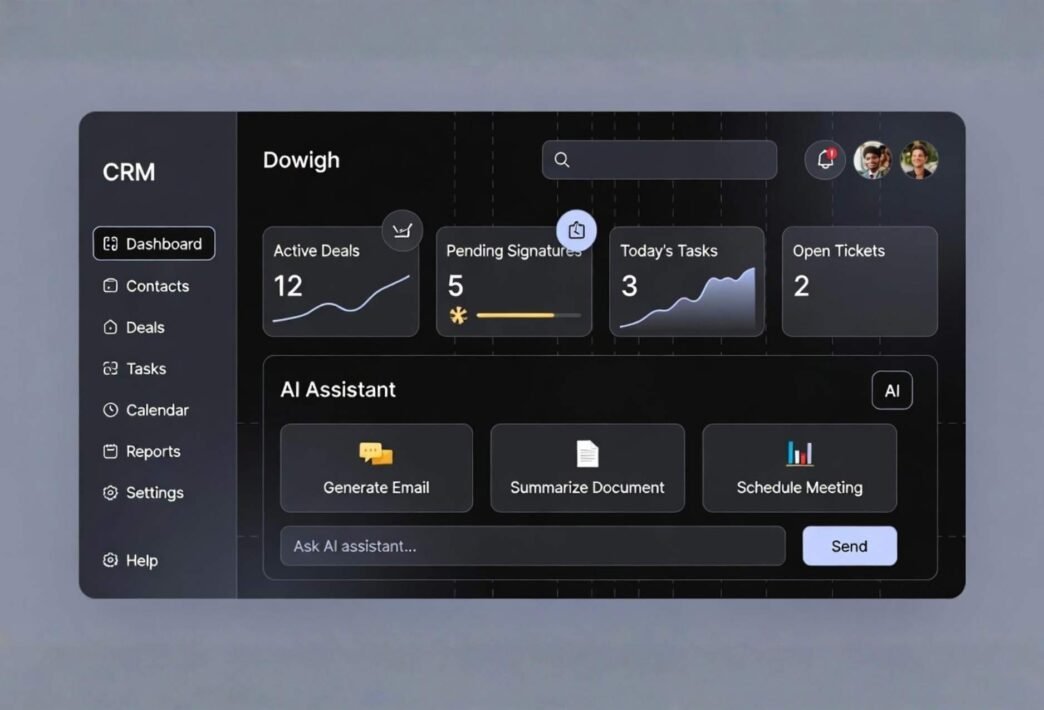
- Maintain clear pipeline visibility across buyers, sellers, and investors
- Support solo agents today and multi-user teams as the business grows
This approach explains why many agents outgrow basic or free CRM tools as volume increases. Instead of layering multiple systems together, GoHighLevel functions as an operating system for lead conversion and retention. Automation handles timing and consistency, while agents focus on conversations, pricing strategy, and closing decisions.
For agents evaluating the best CRM for real estate in 2026, the key consideration is not how many features a platform offers—but whether it protects revenue by enforcing process as business complexity increases. GoHighLevel is designed for exactly that transition.
What makes the best CRM for real estate agents in 2026?
The best CRM for real estate in 2026 combines automated follow-up, flexible pipelines, and marketing workflows in a single system that scales with an agent’s business.
In practice, agents need more than reminders. A high-performing CRM supports inbound leads from multiple sources, assigns tasks automatically, and provides visibility into every stage of the deal lifecycle. The most effective platforms reduce manual data entry and enforce consistent processes—especially important for teams and brokerages.
From solo agents to multi-agent teams, the defining factor is whether the CRM adapts to growth without forcing a system change. That adaptability is what separates a true real estate CRM from basic contact software.
How does CRM in real estate improve lead conversion and retention?
CRM in real estate improves conversion and retention by ensuring fast response times, consistent nurturing, and clear accountability for every lead. Real-world data consistently shows that speed-to-lead and follow-up consistency outperform marketing spend alone. CRMs automate these touchpoints, ensuring that no inquiry is forgotten and no follow-up depends on memory.
Beyond conversion, CRMs support retention by maintaining long-term communication with past clients. Automated check-ins, milestone reminders, and market updates help agents stay relevant long after a transaction closes—turning one-time buyers into repeat clients and referral sources.
Are free CRM options viable for real estate agents?
A free CRM for real estate agents can work at early stages, but limitations in automation, reporting, and scalability often require an upgrade as volume increases. Free CRMs typically handle basic contact management and manual task tracking. For new agents, this may be sufficient. However, as lead sources multiply and follow-up sequences become more complex, gaps appear.
Most agents outgrow free systems when they need automated workflows, advanced pipelines, or team-level visibility. At that point, upgrading becomes less about cost and more about protecting revenue from missed opportunities.
How should agents choose between CRMs built for agents, teams, or brokerages?
Agents should choose a CRM based on how leads flow through their business today and how their operation is expected to scale over the next 12–24 months.
To make this decision practical and objective, agents should evaluate CRMs using the following criteria:
- Current business structure
Solo agents typically need speed, automation, and simplicity, while teams require shared pipelines, role-based access, and lead distribution. - Lead volume and source complexity
If leads come from multiple portals, ads, websites, and referrals, a more advanced CRM is required to manage attribution and follow-up accurately. - Growth trajectory
Agents planning to build a team or brokerage should avoid CRMs that cannot expand into multi-user environments without a full migration. - Accountability and reporting needs
Teams and brokerages benefit from dashboards, performance tracking, and activity logs that are unnecessary for solo operators. - Process enforcement vs flexibility
Individual agents may prefer flexible systems, while brokerages need CRMs that enforce standardized workflows across users. - Integration with marketing and automation tools
CRMs designed for scaling businesses must connect seamlessly with marketing automation, advertising, and communication platforms.
Choosing the right CRM is less about brand reputation and more about operational fit. When the CRM matches how work is actually done, agents spend less time managing systems and more time converting leads into closed deals.
Core CRM workflows that matter in real estate
Lead lifecycle management
From first inquiry to closed deal, CRMs track every interaction, ensuring agents always know the next action required.
Automated follow-up and reminders
CRMs remove guesswork by triggering messages, tasks, and alerts automatically based on lead behavior.
Pipeline visibility and forecasting
Clear deal stages help agents prioritize effort and forecast revenue more accurately.
These workflows are foundational and should exist regardless of CRM price point.
CRM workflows compared across business sizes
| Business Type | CRM Priority | Typical Outcome |
| Solo Agent | Speed-to-lead, automation | Higher conversion with fewer hours |
| Small Team | Lead distribution, tracking | Consistent follow-up across agents |
| Brokerage | Reporting, compliance | Scalable growth with reduced risk |
This comparison highlights why CRM selection must align with operational reality.
The Xalt Stack approach to choosing the best CRM for real estate
At Xalt Stack, we do not rank CRMs by popularity. We evaluate them based on workflow fit, scalability, and revenue protection. Our playbooks focus on mapping real estate processes—lead capture, follow-up, deal progression—to tools that reduce human error.
This approach helps agents avoid switching platforms every few years. Instead, they adopt systems that evolve with their business.
Conclusion: The right CRM is a growth decision
The best CRM for real estate in 2026 is not the cheapest or the most advertised—it’s the one that enforces consistency, protects leads, and supports growth without friction. While a free CRM for real estate agents may work initially, long-term success depends on automation, visibility, and scalability.
CRM in real estate is no longer optional infrastructure. It is the foundation of modern selling. Agents, teams, and brokerages that invest in the right system today position themselves to compete—and win—tomorrow.
FAQs
What is the difference between CRMs built for agents versus teams or brokerages?
Agent-focused CRMs prioritize simplicity and automation, while team and brokerage CRMs emphasize lead distribution, reporting, and role-based access.
Can a solo agent use a CRM designed for teams?
Yes, but it may add unnecessary complexity. Solo agents often benefit more from streamlined CRMs unless they plan to scale soon.
When should an agent upgrade from an agent CRM to a team CRM?
An upgrade is usually needed when lead volume increases, multiple users are involved, or accountability and reporting become critical.
Are brokerage CRMs suitable for small teams?
Brokerage CRMs can work for teams, but they are often overbuilt unless compliance management, recruiting, or enterprise reporting is required.
How does growth planning affect CRM selection?
Choosing a CRM that can scale prevents costly migrations later when an agent expands into a team or brokerage model.
Do free CRMs support team or brokerage workflows?
Most free CRMs for real estate agents lack advanced permissions, automation, and reporting needed for teams or brokerages.
What CRM features matter most for teams?
Lead routing, shared pipelines, performance dashboards, and activity tracking are essential for effective team management.
Is switching CRMs difficult once a business grows?
Yes. Data migration, retraining, and workflow rebuilding can be disruptive, which is why selecting the right CRM early is important.