






The role of a real estate virtual assistant has shifted from basic admin support to a systems-driven extension of the modern agent. Today, a well-structured virtual assistant for real estate operates inside CRMs, marketing platforms, and automation tools that remove friction from daily operations. For agents, teams, and brokerages, the question is no longer whether to delegate—but what to delegate and how to structure it using the right real estate tools.
At Xalt Stack, we analyze real-world agent workflows and map them to practical, tool-first systems. This article breaks down exactly what a real estate virtual assistant can handle—so agents spend more time selling and less time managing tasks.
What tasks can a real estate virtual assistant handle daily?
A real estate virtual assistant can manage recurring, rules-based tasks such as CRM updates, lead follow-ups, calendar coordination, listing data entry, and basic marketing execution. In practice, these tasks consume a disproportionate amount of an agent’s week. A virtual assistant for real estate works best when responsibilities are clearly defined and executed inside structured systems rather than email inboxes or spreadsheets.
Daily operational responsibilities commonly include CRM hygiene (tagging leads, updating statuses, logging conversations), appointment confirmations, inbox triage, and document preparation. When paired with the right real estate tools, assistants follow predefined workflows instead of making judgment calls—reducing errors and maintaining consistency across deals.
Agents who treat the real estate virtual assistant as a system operator—not a general helper—see faster onboarding, clearer accountability, and measurable time savings within the first month.
How does a real estate virtual assistant support lead follow-up and nurturing?
A real estate virtual assistant supports lead follow-up and nurturing by executing structured, time-sensitive follow-up workflows inside CRMs and automation platforms, ensuring every lead is contacted, tracked, and progressed without relying on agent availability.
In practical, real-world operations, this support is systematic rather than ad hoc. A virtual assistant for real estate works within predefined rules so no inquiry slips through the cracks and no pipeline becomes outdated.
Key ways a real estate virtual assistant supports lead follow-up and nurturing include:
- Immediate lead response management
Monitoring inbound inquiries from portals, websites, and ads, then triggering the correct first-touch response based on lead source and intent. - CRM-based follow-up execution
Running scheduled follow-ups such as texts, emails, or task reminders inside the CRM so consistency is maintained across all leads. - Lead status tracking and updates
Updating pipeline stages, adding notes, and logging interactions to keep deal visibility accurate for agents and team leaders. - Hot lead escalation
Identifying replies, high-engagement signals, or booking requests and flagging them instantly for agent intervention. - Long-term nurture sequence management
Maintaining drip campaigns for cold or long-cycle prospects so agents stay top-of-mind without manual effort. - Data hygiene and accountability
Removing duplicates, correcting contact details, and ensuring every lead has a clear owner and next action.
When executed correctly, this approach transforms follow-up from a memory-based task into a controlled system. Agents no longer need to remember who to call or when to respond—the real estate virtual assistant ensures the pipeline moves forward while agents step in only when personal expertise is required.
What marketing and content work can a real estate virtual assistant manage?
A real estate virtual assistant can manage repeatable marketing tasks such as content scheduling, listing descriptions, basic ad assets, and social media coordination.
Marketing is where many agents lose time—not because tasks are complex, but because they are frequent. Assistants prepare listing descriptions, repurpose property highlights into social posts, and schedule content across platforms using defined templates.
Importantly, the assistant does not create strategy. Instead, they execute within guardrails set by the agent or brokerage. This distinction protects brand voice while still removing operational load.
For example, once a listing content framework is defined, a virtual assistant for real estate can populate descriptions, format images, and prepare posts in batches. Over time, this creates marketing consistency without pulling agents away from client-facing work.
Where do real estate virtual assistants stop and agents stay involved?
Real estate virtual assistants stop at decision-making, negotiation, pricing strategy, and client advisory roles that require local market expertise and judgment. A clear boundary is essential. Assistants should not negotiate offers, advise clients, or make pricing decisions. Those responsibilities rely on experience, licensing, and accountability that remain with the agent.
The most effective setups use assistants to surface information—not interpret it. For example, assistants can prepare comparative market data, but agents decide how to position a property. This division preserves trust while still accelerating preparation.
By defining where automation and delegation end, agents avoid quality risks and maintain full control over revenue-generating activities.
Core operational workflows a real estate virtual assistant runs
Lead management and CRM hygiene
- Tagging, assigning, and updating leads
- Monitoring response windows
- Escalating high-intent inquiries
Administrative and scheduling support
- Calendar coordination and reminders
- Document preparation and organization
- Inbox filtering and task routing
Marketing execution
- Listing description preparation
- Content scheduling and repurposing
- Asset uploads and formatting
These workflows are repeatable, measurable, and ideal for delegation when supported by the right real estate tools.
How GoHighLevel Enables Virtual Assistants to Operate Inside Structured Workflows
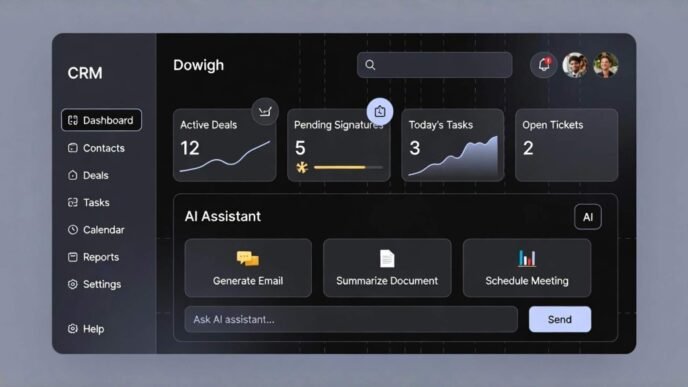
A real estate virtual assistant becomes truly effective when they work inside a centralized system rather than across disconnected tools. This is where GoHighLevel plays a critical role. Instead of functioning as a sales tool, GoHighLevel acts as the operational environment where assistants execute predefined workflows consistently and accurately.
In real-world agent setups, virtual assistants use GoHighLevel to manage execution—not strategy. Lead routing, follow-up timing, pipeline updates, and task tracking are all handled inside the system using rules established by the agent or brokerage. This ensures that assistants are not making judgment calls, but enforcing process.
Common responsibilities virtual assistants handle inside GoHighLevel include:
- Monitoring new leads and confirming correct tagging and assignment
- Running automated follow-up sequences and checking for replies
- Updating pipeline stages after calls, showings, or status changes
- Flagging high-intent responses or booking requests for agent attention
- Maintaining CRM hygiene by removing duplicates and correcting data
This structure creates clear accountability. Automation handles timing and consistency, the virtual assistant manages oversight and execution quality, and the agent remains responsible for conversations, pricing, negotiation, and closing decisions. When assistants operate inside GoHighLevel, delegation becomes predictable, scalable, and measurable rather than reactive.
Used this way, GoHighLevel does not replace the agent or the assistant—it provides the system that allows both roles to function efficiently without friction.
Virtual assistant workflows vs agent-managed workflows
| Workflow Area | Agent-Managed (Manual) | Virtual Assistant + Tools |
| Lead follow-up | Inconsistent, delayed | Automated, monitored daily |
| CRM updates | Often skipped | Enforced and structured |
| Listing content | Created ad hoc | Produced from templates |
| Scheduling | Interrupt-driven | Pre-filtered and confirmed |
| Marketing posts | Sporadic | Batched and scheduled |
This comparison highlights why delegation fails without systems—and why tools are non-negotiable.
How Xalt Stack structures virtual assistant playbooks
Xalt Stack does not advocate generic outsourcing. We recommend pairing a real estate virtual assistant with clearly documented playbooks tied to specific real estate tools.
Our approach starts by identifying high-frequency tasks, mapping them to platforms, and defining success metrics. Assistants are trained on workflows—not judgment calls—making performance measurable and scalable.
This structure allows solo agents to reclaim time, teams to standardize operations, and brokerages to maintain brand control while expanding capacity.
Conclusion: Focus on selling, not managing tasks
A real estate virtual assistant is not a shortcut—it is a force multiplier when paired with the right systems. By delegating execution while retaining strategy and client relationships, agents unlock leverage without sacrificing quality.
The future of productivity in real estate belongs to professionals who build the right tech stack first, then layer human support on top. That is the philosophy behind Xalt Stack—and the reason we emphasize workflows, tools, and clarity over hype.
For agents ready to focus on selling, the path forward is simple: define the work, choose the right real estate tools, and let a virtual assistant handle the rest.
FAQs
What does a real estate virtual assistant do for lead follow-up?
A real estate virtual assistant manages CRM updates, triggers follow-up sequences, monitors responses, and escalates hot leads so agents never miss opportunities.
Can a virtual assistant for real estate respond to new leads immediately?
Yes. With the right setup, a virtual assistant for real estate ensures instant first-touch responses through automated texts or emails inside CRM systems.
Does a real estate virtual assistant replace agent communication?
No. The assistant handles execution and tracking, while agents step in for conversations, negotiations, and relationship-building.
How does a real estate virtual assistant help with long-term lead nurturing?
They maintain drip campaigns and scheduled follow-ups, keeping prospects engaged over weeks or months without manual agent effort.
Are real estate virtual assistants only useful for large teams?
No. Solo agents often benefit the most because a real estate virtual assistant removes operational load without requiring additional in-house staff.
What real estate tools do virtual assistants typically work inside?
They operate within CRMs, marketing automation platforms, and content tools designed to standardize follow-ups and pipeline management.
How does a virtual assistant for real estate improve conversion rates?
By ensuring fast response times, consistent follow-ups, and clean CRM data, assistants reduce lead leakage and improve overall pipeline performance.
Is training required before assigning lead follow-up to a real estate virtual assistant?
Yes. Clear workflows, response rules, and tool access must be defined so the assistant executes processes accurately and consistently.