




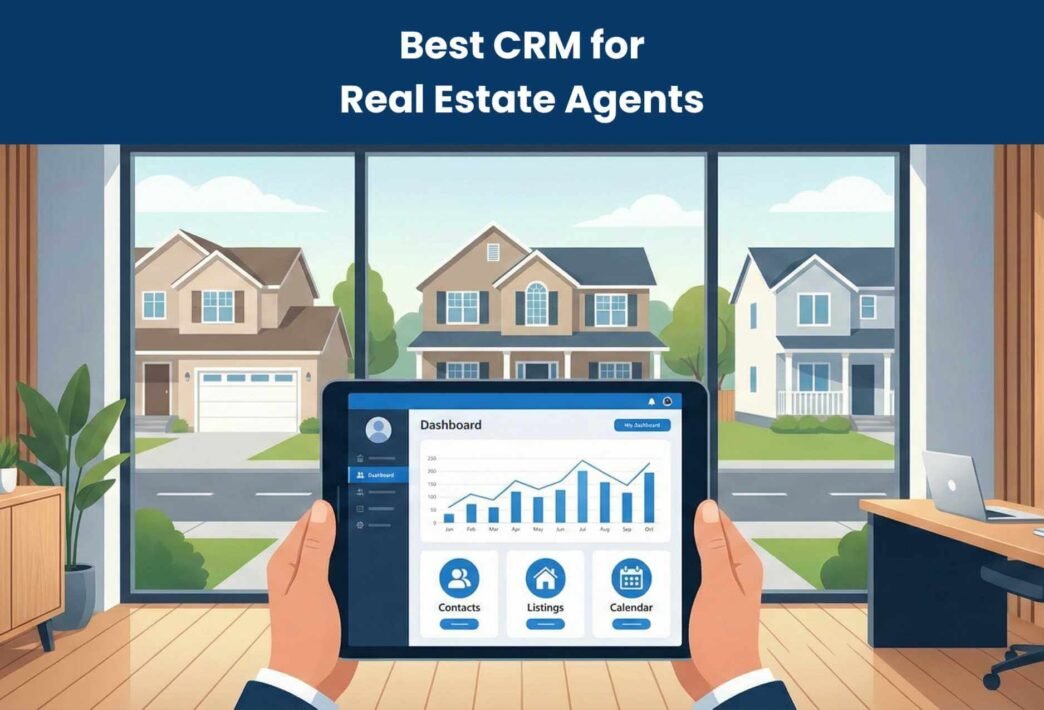
Choosing the best CRM for real estate agents is no longer about contact storage or basic reminders. In 2026, CRM platforms sit at the center of marketing, lead management, and client communication. The agents, teams, and brokerages growing fastest are those using a CRM as an operating system, not just a database.
This guide breaks down how CRM in real estate actually works today, what separates average platforms from high-performing ones, and how to evaluate the best CRM for real estate based on workflows, scale, and long-term efficiency rather than surface-level features.
What makes the best CRM for real estate agents today?
The best CRM for real estate agents is one that centralizes leads, automates follow-up, and supports marketing workflows without adding operational complexity. Modern real estate CRMs must handle far more than contact management. Agents operate across multiple channels, websites, paid ads, social platforms, referrals, and open houses. A strong CRM connects all of these sources into a single pipeline where every interaction is tracked and acted upon.
The most effective systems support automation at critical moments, such as instant lead response, task creation, and follow-up sequencing. This is where CRM in real estate creates leverage. Instead of relying on memory or manual effort, the CRM becomes responsible for consistency, timing, and accountability. For solo agents, the best CRM for real estate agents prioritizes simplicity and speed. For teams and brokerages, it must also support lead distribution, reporting, and role-based access.
How does CRM in real estate improve lead conversion?
CRM in real estate improves lead conversion by reducing response time, standardizing follow-up, and maintaining long-term engagement with prospects. Most lost deals in real estate happen due to delayed or inconsistent follow-up. A well-configured CRM eliminates this problem by triggering automated actions the moment a lead enters the system. These actions can include text messages, emails, task assignments, or pipeline updates.
Beyond speed, CRM platforms improve conversion by maintaining visibility across the full client journey. Every call, message, showing, and note is logged, giving agents full context before each interaction. This continuity is especially critical in longer buying cycles or high-ticket commercial transactions. When CRM workflows are aligned with how agents actually work, the system quietly increases conversion without requiring additional effort.
Which CRM features matter most for real estate professionals?
The most important CRM features for real estate professionals are lead automation, pipeline visibility, and marketing integration. Not all CRM features deliver equal value. In real estate, the most impactful capabilities are those that remove friction from daily operations. Lead routing ensures inquiries are handled quickly, while pipelines provide clarity on deal status and next actions.
Marketing integration is another defining factor. The best CRM for real estate connects directly with landing pages, email campaigns, and advertising platforms, allowing agents to manage marketing and sales from one environment.
Reporting and analytics also play a growing role. Teams and brokerages rely on CRM data to understand lead sources, agent performance, and campaign ROI. Without this visibility, scaling becomes guesswork rather than strategy.
Is one CRM the best CRM for real estate agents at every level?
No single CRM is best for every real estate agent; the right choice depends on business size, workflow complexity, and growth goals.A solo agent focused on listings and referrals may require a lightweight CRM with strong automation. A fast-growing team needs advanced routing, permissions, and reporting. Brokerages require enterprise-level controls, onboarding systems, and long-term data retention.
This is why evaluating the best CRM for real estate agents must be contextual. The wrong platform, even a popular one, can slow adoption and reduce ROI if it doesn’t align with operational reality.
The best CRM for real estate is the one that fits how the business runs today while supporting where it plans to grow.
Core CRM Capabilities Every Real Estate Stack Needs
A modern CRM in real estate must support these foundational capabilities:
- Lead Capture & Source Tracking: Automatically collect leads from websites, ads, portals, and referrals
- Automated Follow-Up: Trigger emails, SMS, and tasks based on lead behavior
- Pipeline Management: Visual deal stages with clear next actions
- Contact & Communication History: Centralized records for calls, texts, emails, and notes
Without these core functions, even the most advanced CRM will struggle to deliver results.
Real-World CRM Workflows for Real Estate Agents
Buyer Lead Workflow
New buyer leads enter through ads or landing pages, trigger instant responses, and move into a nurture sequence until engagement signals indicate readiness.
Listing Client Workflow
Seller inquiries are tagged, routed, and followed up with valuation materials and scheduled calls, ensuring no opportunity is overlooked.
Long-Term Nurture Workflow
Past clients and cold leads receive periodic updates, market insights, and reminders, keeping the agent top of mind over time.
These workflows illustrate how CRM in real estate functions as a system rather than a static tool.
Comparing Popular CRM Platforms for Real Estate
All-in-One CRM Platforms
Platforms like GoHighLevel are designed to combine CRM, marketing automation, and communication tools into one system, making them well-suited for agents and teams focused on scalability.
Traditional CRM Platforms
Tools such as HubSpot offer strong CRM foundations but often require additional integrations to match real estate-specific needs.
The best CRM for real estate agents often depends on how much customization and automation is required versus ease of use.
How GoHighLevel Fits Modern Real Estate CRM Workflows
As CRM platforms evolve beyond contact management, some systems are designed to function as full operational hubs rather than standalone databases. GoHighLevel is often used by real estate agents and teams that want their CRM to actively run follow-up, communication, and pipeline management instead of relying on manual effort.
In practice, GoHighLevel connects lead capture, messaging, and pipeline updates into a single workflow. When a lead enters the system—whether from a website form, paid ad, or open house sign-in—the CRM triggers predefined actions automatically. Responses are sent, follow-ups are scheduled, and deal stages update without requiring constant agent input.
Within real estate operations, GoHighLevel is commonly used to:
- Centralize leads from multiple marketing channels
- Trigger instant SMS or email responses to new inquiries
- Enforce consistent follow-up across long buying cycles
- Maintain clear pipeline visibility for agents and managers
This approach highlights how CRM in real estate has changed. Instead of serving as a passive record-keeping tool, the CRM becomes responsible for execution and consistency. Agents remain focused on conversations, negotiation, and client relationships, while the system handles timing, reminders, and organization in the background.
GoHighLevel vs Traditional CRMs in Real Estate
The key difference between modern automation-first CRMs and traditional platforms is how much execution they remove from the agent’s workload. The table below shows how GoHighLevel compares to traditional CRM systems commonly used in real estate.
| CRM Capability | GoHighLevel | Traditional CRMs |
| Core Focus | Automation & execution | Contact organization |
| Lead Response | Instant, automated replies | Manual or delayed |
| Follow-Up | System-driven nurture sequences | Agent-dependent reminders |
| Pipeline Management | Automated, trigger-based stages | Static deal tracking |
| Marketing Integration | Built-in messaging & campaigns | Requires external tools |
| Agent Role | Oversight & conversations | Execution & tracking |
Implementing CRM in Real Estate Without Overcomplicating Operations
Adoption is one of the biggest challenges with CRM in real estate. A platform that is too complex will be underused, while one that is too simple may limit growth. Successful implementation starts with defining workflows before selecting tools.
Agents should begin with one or two core pipelines, automate the most repetitive tasks, and expand gradually. Teams should standardize processes early to avoid inconsistencies later. Brokerages must focus on training, documentation, and accountability to ensure adoption across agents.
The best CRM for real estate agents is only effective when it becomes part of daily habits.
Conclusion: Choosing the Best CRM for Real Estate Agents
The best CRM for real estate agents is not defined by popularity or feature count. It is defined by alignment with workflows, ability to automate critical tasks, and support for long-term growth. When implemented correctly, CRM in real estate becomes the backbone of marketing, sales, and client management.
For agents, teams, and brokerages building a modern tech stack, CRM is not optional, it is foundational. Choosing the right platform today creates operational leverage that compounds over time, reinforcing a smarter, more scalable real estate business.
FAQs
What is the best CRM for real estate agents?
The best CRM for real estate agents is one that centralizes leads, automates follow-up, and supports daily marketing workflows without adding complexity. The right choice depends on business size and growth goals.
How is CRM used in real estate?
CRM in real estate is used to manage leads, track client interactions, automate follow-ups, and monitor deal progress from first inquiry to closing.
Is a CRM necessary for real estate agents?
Yes, a CRM is essential for real estate agents who want consistent follow-up, better lead conversion, and long-term client retention, especially when managing multiple lead sources.
What features should a real estate CRM include?
A real estate CRM should include lead capture, automated communication, pipeline tracking, contact history, and basic reporting to support marketing and sales workflows.
Are all real estate CRMs the same?
No, CRM platforms vary widely in automation, customization, and scalability. The best CRM for real estate aligns with how an agent, team, or brokerage actually operates.
Can one CRM work for both solo agents and brokerages?
Some CRMs can support multiple business sizes, but configurations differ. Solo agents need simplicity, while brokerages require advanced routing, permissions, and reporting.
How does a CRM improve lead conversion in real estate?
CRM improves conversion by reducing response times, standardizing follow-ups, and ensuring every lead receives consistent communication throughout the buying or selling process.
When should a real estate agent upgrade their CRM?
Agents should consider upgrading their CRM when lead volume increases, follow-ups become inconsistent, or current systems no longer support automation and reporting needs.